Olivia Chow Launches Re-election Bid with Vision of 'Hope Over Fear' for Toronto
Toronto Mayor Olivia Chow framed her 2026 re-election campaign as a choice between progressive unity and service cuts during a spirited Danforth Music Hall rally featuring local artists and community advocates.
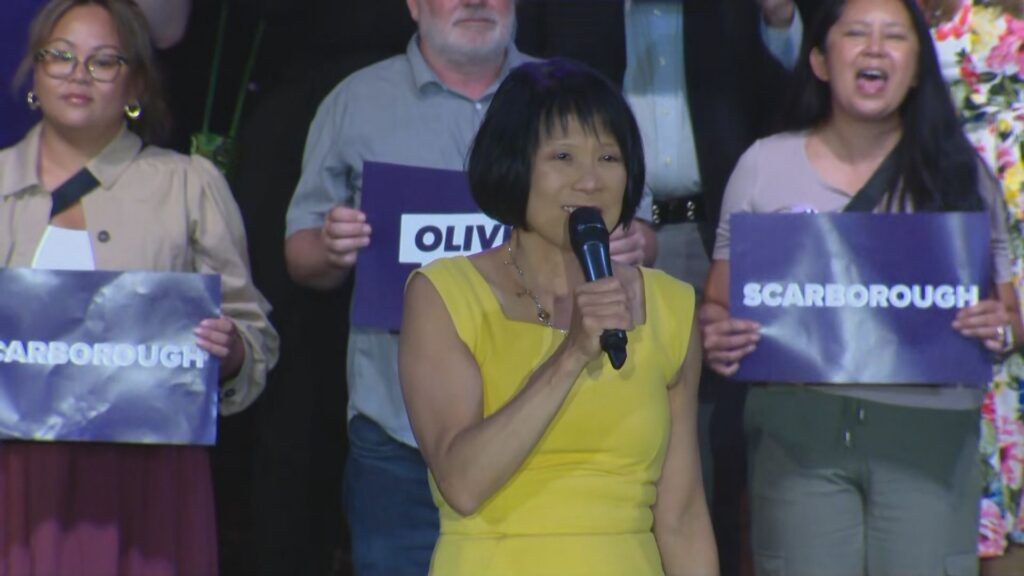
Toronto Mayor Olivia Chow officially launched her 2026 re-election campaign Wednesday night with a passionate address that framed the upcoming election as a decisive moment for the city's future. Speaking to a packed house at the historic Danforth Music Hall, Chow presented voters with two starkly contrasting visions for Toronto - one built on collaboration and public investment, the other marked by division and austerity measures.
Two Competing Visions for Toronto
Chow's speech centered on what she characterized as a fundamental choice facing Toronto residents. "We can choose to work together, support each other, [and] continue building the city we love," the mayor declared, outlining a platform focused on expanding affordable housing and reducing living costs. She positioned this optimistic vision against what she described as the alternative: "We could choose leaders who will starve our public spaces and cut our services. Divide us instead of bringing us together."
This dichotomy reflects the mayor's broader political philosophy, which she grounded in specific policy achievements from her first term. Chow highlighted her administration's work in constructing new affordable housing units, maintaining frozen TTC fares, extending Toronto Public Library operating hours, and reducing 911 emergency response times. These concrete examples served to illustrate her argument that progressive governance delivers tangible improvements to residents' daily lives.
The mayor acknowledged the challenging economic context facing Toronto, particularly the uncertainty created by U.S. trade policies under former President Donald Trump. "Our world is rapidly changing around us. Everything is less affordable, for almost everyone," Chow noted, while insisting that Toronto had begun turning things around under her leadership. This balanced message - recognizing external pressures while touting local progress - formed a core theme of her campaign launch.
From Personal History to Public Policy
Chow's speech wove together personal narrative with policy substance, a hallmark of her political communication style. She recalled her childhood as an immigrant in St. Jamestown, emphasizing how public spaces like Nathan Philips Square and Centre Island provided formative experiences. "All of the opportunities I had growing up happened because our city made them possible," Chow reflected, drawing a direct line between her personal story and her governing priorities.
This biographical approach reached its emotional peak when Chow discussed the expansion of healthy breakfast programs in Toronto schools. The initiative represents the realization of a 35-year-old vision she developed with her late husband, former NDP leader Jack Layton. "Together Jack and I dreamed about a plan to feed every kid in every school in Toronto," Chow shared, detailing how they had calculated costs and mapped implementation strategies decades ago. The program's current citywide operation allows her to say with evident pride: "Now as your mayor, finally, that program Jack and I dreamed of is a reality. In every classroom. In every school. For every child."
Building a Cultural Coalition
The campaign kickoff served as both political rally and cultural showcase, reflecting Chow's strategy of building broad-based support across Toronto's diverse communities. The event featured performances by acclaimed Toronto rapper DijahSB and the celebrated Pan Fantasy Steelband steel pan ensemble. Canadian music legend Jim Cuddy of Blue Rodeo and Scarborough-based comedian Sunthar V added star power to the proceedings, while Ontario's first Poet Laureate Randell Adjei provided artistic gravitas.
Community advocates also played prominent roles in the program. Tenant organizer Ryan Endoh, an ACORN leader and paralegal, joined social work pioneer Laurel Rothman in addressing the crowd. Their participation underscored Chow's focus on housing justice and social services - issues that resonate strongly with her progressive base while also affecting broader segments of the electorate. This carefully curated lineup demonstrated the campaign's effort to mobilize both activist networks and cultural leaders who can help expand Chow's appeal.
Political Landscape and Early Advantage
Chow enters the re-election campaign with significant political advantages according to early polling. Data from Liaison Strategies shows her holding a double-digit lead over main opponent Brad Bradford, a former city councillor. This early edge reflects public approval of her administration's signature accomplishments, particularly in transportation and housing affordability.
The mayor framed the coming campaign not as a departure from her current agenda but as an opportunity to build on existing foundations. "We have built the foundation. Let's finish what we started," she urged supporters, listing ongoing priorities like making the city more affordable, strengthening public services, and fostering community care. This continuity message aims to position Chow as a steady leader during uncertain times while allowing her to take credit for first-term achievements.
Broader Significance of the Campaign
Chow's re-election bid represents more than just another municipal contest - it serves as a key test case for progressive urban governance in Canada's largest city. Her ability to translate activist roots into concrete policy achievements has already reshaped Toronto's political landscape. The 2026 campaign will determine whether this approach can maintain momentum amid economic challenges and competing visions for the city's future.
The campaign's emphasis on Chow's personal history and long-standing community connections reflects a strategic effort to build an enduring political identity that transcends individual policy issues. By anchoring her vision in both nostalgic recollections of Toronto's past and specific plans for its future, the mayor aims to present herself as the guardian of the city's egalitarian spirit. As external pressures like housing affordability and global economic uncertainty intensify, Chow's challenge will be convincing voters that her brand of collaborative, service-oriented governance remains Toronto's best path forward.
Looking Ahead to 2026
As Chow concluded her speech with a call to "keep moving forward," the outlines of the coming campaign became clear. She will likely continue emphasizing tangible improvements to daily life while warning against austerity measures that could reverse progress. The early involvement of cultural figures and community advocates suggests an effort to build excitement beyond traditional political circles.
With nearly two years until the election, Chow's early launch allows her to define the terms of debate while opponents organize their challenges. The contrast between her vision of collaborative governance and the alternative she described - one of division and service cuts - will likely form the central narrative of Toronto's 2026 mayoral race. How voters respond to this framing will determine whether Chow's first term becomes the foundation for a longer progressive era in Toronto politics or a transitional moment between different approaches to the city's challenges.