Thieves steal Renoir paintings from French Riviera museum in latest high-profile art heist
Four valuable Renoir paintings were stolen from a French museum, with two later found discarded, as authorities investigate the latest in a string of international art thefts that have targeted cultural treasures across Europe and North America.
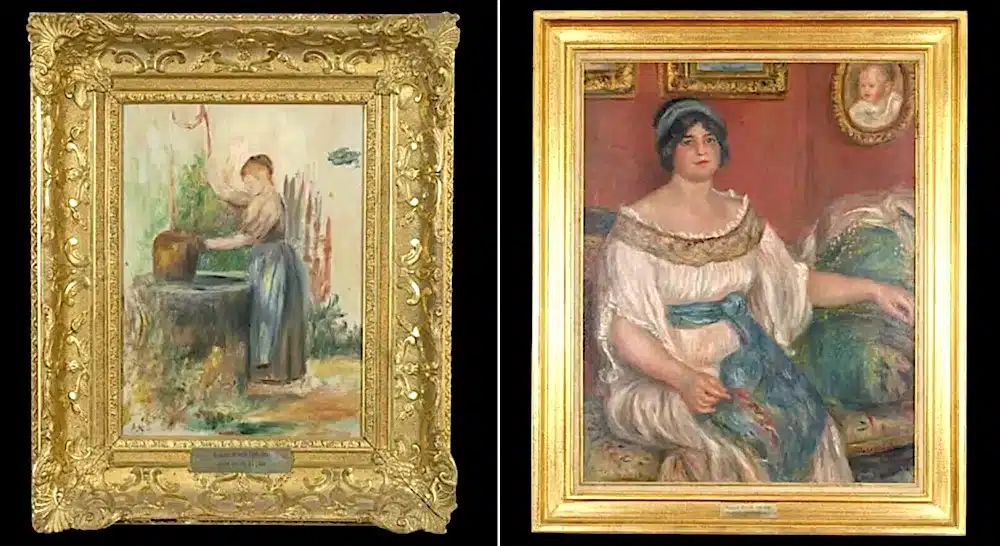
Thieves carried out a brazen daylight robbery at the Renoir Museum in Cagnes-sur-Mer on the French Riviera, making off with four valuable works by the impressionist master Pierre-Auguste Renoir before abandoning two in the museum garden during their escape, according to local officials. The stolen paintings included "Portrait of Madame Colonna Romano" and "Young Woman at the Well," with the museum housing a total of twelve Renoir works. This incident marks the latest in a troubling series of high-profile art thefts that have plagued museums worldwide, raising questions about security measures for cultural treasures.
The stolen Renoir paintings and their significance
The targeted museum, located in the picturesque town of Cagnes-sur-Mer northwest of Nice, represents a significant cultural landmark dedicated to the celebrated French artist. Renoir spent his final years in this Mediterranean town, creating some of his most famous works in the region. The stolen paintings form part of this important artistic legacy, with their disappearance representing a loss to both local heritage and international art history.
Local police have launched a comprehensive investigation but have not yet released details about potential suspects or the precise method of entry used by the thieves. While the exact value of the stolen paintings has not been disclosed, works by Renoir typically command millions at auction, making them attractive targets for art thieves. The artist's works have consistently ranked among the most sought-after impressionist paintings in the global art market.
Recent European art thefts and recoveries
This incident follows another high-profile theft in Italy earlier this year, where thieves stole three paintings by Renoir, Cézanne and Matisse from the Magnani Rocca Foundation near Parma. Those works, including Renoir's "Fish," Cézanne's "Still Life with Cherries" and Matisse's "Odalisque on the Terrace," were later recovered in August by the Italian Carabinieri's specialized art recovery squad.
The Italian case demonstrated both the challenges and successes in combating art theft. While the stolen works were considered minor pieces by the artists, they still carried estimated values in the millions of euros. The recovery operation, which led to the detention of five individuals believed to be part of an organized crime group, showed the effectiveness of coordinated international efforts to track down stolen artworks.
The Louvre's stolen Napoleonic jewels and security aftermath
One of the most dramatic recent heists occurred at the Louvre in Paris last October, when thieves made off with nine pieces from Napoleon Bonaparte's jewelry collection worth an estimated 88 million euros. The perpetrators employed an audacious method, using a basket lift to scale the museum's facade shortly after opening hours, then smashing display cases to access the historic jewels.
While authorities captured the four-person crew responsible, most of the stolen items remain missing, with the exception of Empress Eugénie's damaged crown found outside the museum. The high-profile theft had significant institutional consequences, prompting sweeping security upgrades at the world's most visited museum and leading to the replacement of its director. This case highlighted the vulnerabilities even major institutions face against determined thieves.
Historic art thefts that shaped museum security practices
The 1911 theft of the Mona Lisa from the Louvre stands as perhaps the most consequential art heist in history. The painting's disappearance for two years before its recovery in Florence ironically helped transform Leonardo da Vinci's portrait into the world's most recognizable artwork. The thief, Vincenzo Peruggia, a former museum employee, had hidden inside the building before walking out with the masterpiece concealed under his coat.
In the United States, the 1990 Isabella Stewart Gardner Museum heist remains the country's largest unsolved art theft. Two men disguised as police officers gained entry by claiming to respond to a call, then overpowered security guards and spent 81 minutes selecting 13 works valued up to $500 million. The empty frames still hang in the Boston museum as poignant reminders of the missing masterpieces by Rembrandt, Vermeer, Degas and Manet.
German museum burglaries and their outcomes
German cultural institutions have suffered several notable thefts in recent years that have tested law enforcement capabilities. In 2017, burglars executed a daring theft of the 100-kilogram "Big Maple Leaf" gold coin from Berlin's Bode Museum, valued at about 3.75 million euros. Investigators believe the thieves later dismembered and sold the massive Canadian coin, demonstrating how thieves often destroy cultural artifacts for their raw material value.
Two years later, thieves targeted Dresden's Green Vault, one of the world's oldest museums, making off with three sets of 18th-century royal jewels worth hundreds of millions. While authorities recovered part of the haul, officials noted the unique nature of the pieces would make them nearly impossible to sell on the legitimate market. The convictions of five men in this case showed the increasing sophistication of art crime investigations.
The golden toilet heist and its symbolic meaning
In one of the more unusual art heists, thieves stole a fully functional golden toilet from England's Blenheim Palace in 2019. The 18-carat satirical work by Maurizio Cattelan, titled "America" and insured for nearly 5 million pounds, represented a pointed commentary on excessive wealth. Prosecutors revealed the lead thief had actually used the toilet during reconnaissance, later describing the experience as
"splendid"in court testimony.
The thieves returned with sledgehammers and crowbars to remove the artwork from its plumbing, causing significant water damage during their escape. The toilet's prior exhibition history, including its controversial offer to then-U.S. President Donald Trump by the Guggenheim Museum, added layers of political and artistic significance to the theft. Investigators believe the purloined potty was likely dismantled and sold for its gold value, highlighting how even conceptual art becomes reduced to commodity when stolen.
The broader implications of art theft
High-profile art thefts capture public imagination but represent serious crimes with lasting cultural consequences. Beyond the monetary value, stolen artworks often become impossible to display or study, creating gaps in our collective cultural heritage. Many stolen pieces end up hidden for decades or destroyed when thieves realize they can't be sold openly, representing an irreplaceable loss to art history.
These incidents force museums to continually reassess security measures while balancing public access with protection of priceless collections. The pattern of thefts suggests organized crime groups increasingly target artworks, either for private collectors or as collateral in illegal transactions. While recovery efforts have improved through international cooperation and specialized police units, preventing such brazen thefts remains an ongoing challenge for cultural institutions worldwide as they work to preserve humanity's artistic legacy for future generations.