UK neurosurgeons complete world's first AI-assisted brain tumour removal in London
A 48-year-old British man regained his vision after pioneering surgery using real-time AI analysis to guide tumour removal at the base of his brain.
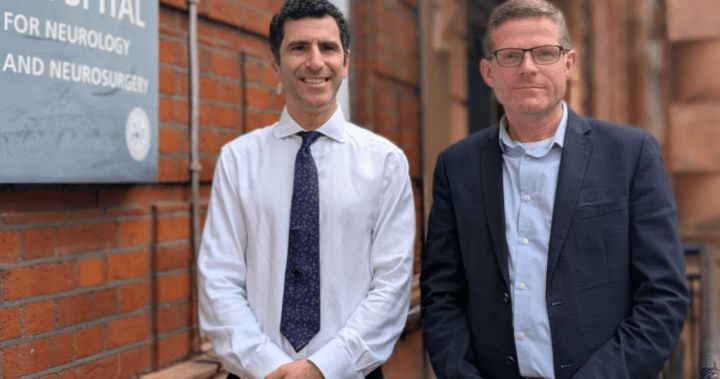
Neurosurgeons at London's National Hospital for Neurology and Neurosurgery have made medical history by performing the world's first AI-assisted brain tumour removal, successfully restoring the eyesight of a 48-year-old patient. The groundbreaking procedure marks a significant advance in integrating artificial intelligence into high-risk neurological surgeries, demonstrating how technology can enhance rather than replace human surgical expertise.
The surgical milestone
The operation targeted a tumour in Rhys Hibbert's pituitary gland, a structure roughly the size of a marble located at the brain's base. This region contains critical nerves and blood vessels that control vision, presenting surgeons with an exceptionally challenging operating environment. The University College London Hospital NHS Foundation Trust explained that traditional surgery in this area carries extreme risk due to the anatomical complexity. Surgeons involved in the case emphasized that even a one-millimeter error could potentially cause blindness, stroke or death, underscoring the precision required.
The AI system developed by UCL's Hawkes Institute analyzed live surgical footage during the procedure, providing real-time alerts about dangerous areas while helping maximize tumour removal. This technological assistance gave surgeons enhanced spatial awareness in one of the body's most delicate regions. The tool's ability to process visual information beyond human perception thresholds allowed the surgical team to make more informed decisions during critical moments of the operation.
Patient journey and recovery
Rhys Hibbert, a customer service manager and active community volunteer from the outskirts of London, became the first person to undergo this experimental AI-assisted procedure. Medical staff had warned that his growing pituitary tumour posed an imminent threat to his vision, with the potential to cause permanent blindness if left untreated. Following his full recovery, Hibbert described participating in the trial as "humbling," particularly at an institution with such a distinguished neurosurgical history.
"The National Hospital for Neurology and Neurosurgery was founded in 1859 and was the world's first dedicated neurosurgical hospital. So to me, it seems very fitting that the same hospital should also be the world's first to carry out an AI-assisted neurosurgery," Hibbert told the foundation.
His successful outcome not only restored his vision but also validated years of research into AI surgical applications, providing a valuable case study for future patients facing similar conditions.
Technological innovation
The AI system represents years of specialized development by researchers at University College London's Hawkes Institute. Unlike general-purpose AI, this technology was specifically trained to recognize critical neural pathways and vascular structures in the pituitary region. During surgery, it processed live video feeds to identify anatomical landmarks and potential hazards with precision surpassing human visual capabilities.
The system demonstrated additional potential beyond its current hazard detection function. Developers noted its capacity for tracking surgical instruments and their interaction with brain tissue, a feature that could eventually help standardize complex procedures and reduce variability between surgical teams. Importantly, the technology operates as a supplementary tool rather than an autonomous system, preserving human decision-making while enhancing visualization and spatial awareness.
Institutional and governmental perspectives
UK Health Innovation Minister James Frith highlighted the achievement as exemplary of AI's potential in healthcare, noting its alignment with national priorities to modernize medical treatment. He emphasized the government's commitment to balancing innovation with patient safety in the NHS.
"This is an example of AI at its best: patients getting care previously deemed unimaginable thanks to the latest groundbreaking technology," Frith said. "I am so pleased for Rhys that he had this life-changing surgery as part of government-funded research that will pave the way for the treatments of tomorrow."
The surgical team, led by consultant neurosurgeon Hani Marcus and surgical resident Danyal Khan, performed the landmark procedure as part of broader NHS research initiatives. Their success demonstrates how public funding can catalyze medical breakthroughs while maintaining rigorous clinical standards.
Clinical implications
This breakthrough extends beyond technical achievement, offering tangible benefits for patients facing vision-threatening conditions. The AI assistance could mean the difference between permanent disability and full recovery for individuals with similarly complex tumours. As healthcare systems globally confront rising neurological caseloads, such innovations may help maintain treatment quality while managing costs.
The technology's ability to process visual data beyond human perception thresholds could eventually reduce complication rates in delicate neurosurgical procedures worldwide. Future applications might expand to other high-precision surgical specialties where millimeter-level accuracy proves critical, such as spinal surgeries or procedures involving other sensitive brain regions.
Ethical framework
The successful trial demonstrates how AI can enhance human surgical expertise without compromising patient safety or physician autonomy. Unlike autonomous surgical systems, this technology serves as an enhanced visualization tool - analogous to advanced navigation systems in aviation that still require pilot decision-making. Developers and clinicians emphasized the rigorous testing and validation processes that preceded clinical adoption.
Ethical considerations around data privacy, algorithmic transparency, and human oversight remain central to the technology's continued development. The UK team's approach maintains surgeon control at all procedural stages while providing supplementary data analysis, establishing an important precedent for AI-assisted medicine. This careful balance between innovation and precaution could inform regulatory frameworks as similar technologies emerge globally.
Historical context
The National Hospital for Neurology and Neurosurgery's role in this breakthrough carries particular significance given its historical position in medicine. Founded in 1859 as the world's first dedicated neurosurgical hospital, the institution has maintained its leadership position through successive waves of medical innovation. This latest achievement continues that tradition by combining centuries of accumulated surgical knowledge with cutting-edge computational technology.
The hospital's longstanding reputation for excellence in neurological care likely contributed to its selection as the site for this pioneering procedure. Its extensive experience with complex cases provided the necessary foundation for safely integrating new technologies into high-risk surgeries.
Future directions
This achievement represents more than a surgical first - it signals a paradigm shift in how advanced computing can assist in medicine's most high-stakes scenarios. The case demonstrates how carefully implemented AI can enhance rather than diminish the physician-patient relationship, preserving human judgment where it matters most while providing technological support where beneficial.
As healthcare systems worldwide explore AI applications, this model of collaborative intelligence between humans and machines offers a template for responsible adoption. Future developments may build on this foundation to address other complex medical challenges requiring precision beyond human capabilities, potentially expanding to related fields such as radiation oncology or microscopic surgery.