U.S. envoys Witkoff and Kushner arrive in Kyiv after Moscow talks with Putin amid escalating Ukraine war
High-level U.S. envoys met with Ukrainian President Zelenskyy following closed-door discussions with Russian President Putin as both sides intensify aerial attacks.
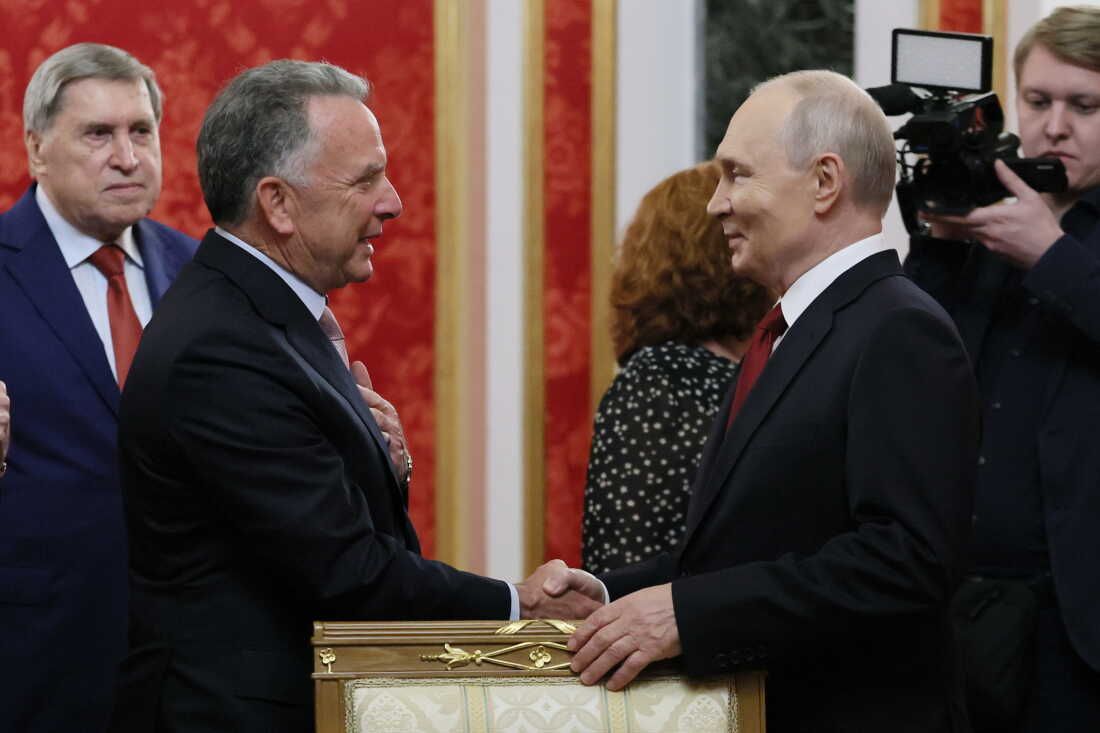
Senior U.S. envoys Jared Kushner and Steve Witkoff arrived in Kyiv on Sunday for talks with Ukrainian officials, marking their first official visit to Ukraine since Russia's full-scale invasion began in February 2022. The diplomatic mission follows a three-hour meeting with Russian President Vladimir Putin in Moscow on Saturday, part of a renewed but fragile effort to revive peace negotiations as both nations escalate drone and missile attacks across front lines.
Shuttle diplomacy amid rising tensions
The American delegation's visit represents Washington's most significant engagement in Ukraine peace talks in six months, following a period where U.S. attention shifted toward tensions with Iran. Their current shuttle diplomacy between Moscow and Kyiv comes as military analysts note increasing sophistication in aerial warfare tactics from both sides. Russia has recently been using fast-flying, jet-powered drones in its attacks, while Ukraine has expanded its long-range strike capabilities. The recurring wail of air-raid sirens has become part of daily life in Kyiv, reflecting the persistent threat from Russian airstrikes.
Ukrainian President Volodymyr Zelenskyy expressed cautious willingness to engage with the envoys, stating through a Telegram post that his administration had prepared detailed proposals regarding postwar security arrangements.
"We are interested in bringing the end of the war closer. Peace is needed. Security guarantees are needed. A just and sustainable postwar peace is needed. Our proposals are prepared,"Zelenskyy wrote, stopping short of predicting breakthrough outcomes from the meetings.
Violence continues despite capital strike pause
While Putin and Zelenskyy agreed to temporarily halt attacks on each other's capitals during the diplomatic exchanges, overnight strikes continued across multiple regions. Ukraine's State Emergency Service reported one civilian death and ten injuries from Russian attacks, including drone strikes in Zaporizhzhia that killed a 74-year-old man and wounded three people. In the Khmelnytskyi region, a drone damaged an apartment building, injuring seven people. Russian authorities in Belgorod region said a Ukrainian drone strike killed one person and seriously wounded another when it hit a vehicle.
The Ukrainian air force claimed successful interceptions of 82 out of 108 Russian drones overnight, along with six missiles. Meanwhile, Russia's Defense Ministry asserted its forces shot down 258 Ukrainian drones over 14 Russian regions, occupied Crimea and the waters of the Black and Azov seas. These competing claims illustrate the intensifying drone warfare that has become central to both nations' military strategies as ground forces remain largely stalemated along the 1,250-kilometer (775-mile) front line.
Civilian reactions reflect war fatigue
As the envoys arrived in Kyiv, dozens of residents observed the daily 9 a.m. moment of silence honoring fallen soldiers - a ritual maintained across Ukraine since the invasion began. Among participants was Nataliia Lipei, 67, who.int/" target="_blank" rel="noopener">who lost her son Viktor in December 2022. Despite health challenges, she has traveled between cities to attend commemorations and expressed cautious hope about the diplomatic efforts.
"I hope these steps and these meetings will definitely produce results, because there has been so much bloodshed and so many deaths here that we have to stop all of this,"Lipei told The Associated Press.
Younger attendees voiced greater skepticism. Oleksandr Pastukhov, a 27-year-old video editor, referenced previous failed ceasefires that collapsed within hours despite diplomatic promises.
"We've already seen delegations like this come here before. We've seen this so-called ceasefire for three days, which ended after just a couple of hours, and now we're supposed to naively think that two people will come and change something,"he said, questioning whether individual envoys could alter the conflict's trajectory.
Economic dimensions of negotiations
Russian foreign policy adviser Yuri Ushakov revealed that Saturday's Moscow discussions extended beyond military matters to explore potential economic cooperation between Russia and the United States. While describing the talks as "constructive, frank, and useful," Ushakov declined to specify what joint projects might be under consideration. He stated that economic issues and potentially large, mutually beneficial joint projects for Russia and America were discussed in considerable detail. This economic dimension suggests Moscow may be positioning for potential sanctions relief or investment opportunities should diplomatic progress occur, though Western governments have consistently linked any economic normalization with complete Russian withdrawal from Ukrainian territory.
Military realities shape negotiation space
With ground forces largely deadlocked after Ukraine's failed 2023 counteroffensive and Russia's incremental gains around Avdiivka, both nations have increasingly relied on aerial bombardment campaigns. The Ukrainian military faces critical ammunition shortages amid delayed Western aid deliveries, while Russian forces struggle with personnel losses estimated in the hundreds of thousands. These constraints create conditions where neither side can achieve decisive victory through conventional means, potentially increasing the theoretical appeal of negotiated solutions even as both governments publicly maintain maximalist positions.
Broader geopolitical context
The envoys' visit occurs against a backdrop of shifting global power dynamics, including the upcoming U.S. presidential election where Ukraine policy has become a partisan issue. European nations have grown increasingly concerned about sustaining military support for Kyiv, while Russia has deepened economic and military ties with China, Iran and North Korea. These external factors complicate the negotiation landscape, as any potential agreements would need to account for multiple stakeholders' security interests beyond the immediate belligerents. The recent exchange of fire between Iran and the United States in the Strait of Hormuz demonstrates how regional conflicts can divert attention from the Ukraine war.
Potential paths forward
While substantial obstacles remain - including Russia's occupation of roughly 20% of Ukrainian territory and Kyiv's demand for full sovereignty restoration - the continuation of high-level talks prevents complete diplomatic breakdown. The involvement of figures like Kushner, who maintains relationships across political divides, could provide alternative communication channels. However, the persistent violence demonstrates both nations' willingness to continue military operations during negotiations, suggesting any peace process would face immediate credibility tests. For civilians enduring daily sirens and strikes, the diplomatic effort represents fragile hope against the alternative of indefinite conflict, even as past disappointments temper expectations.