U.S. diplomat recounts Canada's profound solidarity after 9/11 as 25th anniversary nears
American Consul General Baxter Hunt reflects on Canada's extraordinary acts of compassion following the 2001 attacks, from Gander's hospitality to Ottawa's massive memorial, highlighting enduring bonds between the nations.
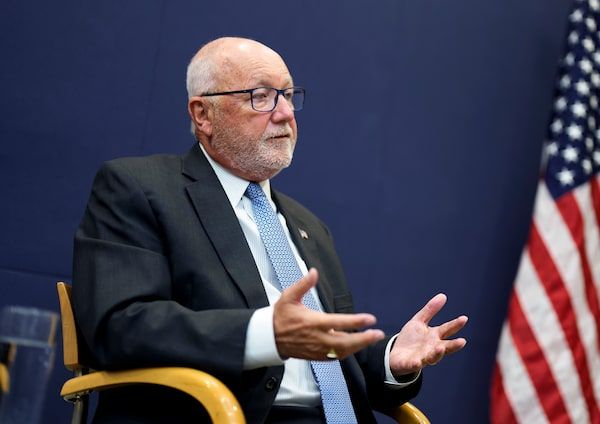
Twenty-five years after the September 11 attacks reshaped global security and international relations, the memories of Canada's compassionate response remain vividly etched in the mind of American diplomat Baxter Hunt. Now serving as U.S. consul general in Toronto, Hunt recalls arriving at the Ottawa embassy the morning after the 2001 terrorist attacks to discover an impromptu memorial of floral tributes left by grieving Canadians. This spontaneous gesture marked just the beginning of what would become a profound display of cross-border solidarity during one of America's darkest hours.
The morning that changed everything
On September 11, 2001, Hunt was a 38-year-old political-military officer stationed at the U.S. Embassy in Ottawa when al-Qaeda terrorists hijacked four commercial airliners, crashing them into New York's World Trade Center, the Pentagon, and a field in Pennsylvania. The coordinated attacks claimed 2,977 lives, including 24 Canadians. "It was just a day that none of us will ever forget," Hunt told The Canadian Press, his voice still carrying the weight of memory. "What also stuck with me was the outpouring of support that we got from Canadians." The diplomat's recollections reveal how ordinary citizens transformed public spaces into memorials almost overnight, with the embassy flowers representing countless individual acts of condolence across the country.
A nation gathers to mourn
The scale of Canadian solidarity became dramatically visible three days after the attacks, when an estimated 80,000 people converged on Parliament Hill for Canada's first national day of mourning in thirty years. RCMP estimates reported by The Canadian Press captured the unprecedented gathering's magnitude as then-Prime Minister Jean Chrétien addressed both the physical crowd and a wounded neighbor. "By their outpouring of concern, sympathy and help, the feelings and actions of Canadians have been clear," Chrétien declared, his words carrying across the silent plaza. "And even as we grieve our own losses, the message they send to the American people is equally clear. Do not despair. You are not alone. We are with you. The whole world is with you." This moment of collective grief reverberated through simultaneous memorials at provincial legislatures and even in Toronto's financial district, where Bay Street workers paused to honor the victims.
Operation Yellow Ribbon and Gander's legacy
While Ottawa hosted formal remembrance, the small Newfoundland town of Gander became the unexpected epicenter of Canada's humanitarian response. When U.S. airspace closed immediately after the attacks, Transport Canada's Operation Yellow Ribbon diverted 238 international flights to Canadian airports. Gander, with a population under 10,000, suddenly found itself hosting 38 wide-body jets and more than 6,500 stranded passengers - a logistical challenge that revealed remarkable community resilience. "Just an incredible showing of compassion by those people for complete strangers, who needed them at that time," Hunt reflected. Across Canada, approximately 33,000 displaced travelers received shelter in what became one of the largest peacetime mobilizations of civilian aid in modern history. The Gander story later inspired the Broadway musical 'Come From Away,' ensuring its place in North American cultural memory.
Security cooperation in a changed world
Behind the scenes of these public displays, Hunt worked closely with Canadian counterparts to address emerging security threats. "No one knew initially exactly what else might happen," he explained, recalling the climate of uncertainty that permeated those early days. American diplomats coordinated with Canadian law enforcement and military personnel to assess vulnerabilities and prevent potential follow-up attacks. This operational partnership foreshadowed lasting changes to continental security, including the creation of the Smart Border Declaration and harmonized airport screening protocols. The attacks also triggered NATO's first-ever invocation of Article 5, the collective defense clause, leading to Canada's participation in the Afghanistan mission where 165 Canadians - 158 soldiers and 7 civilians - would ultimately lose their lives in a conflict spanning more than a decade.
Enduring bonds beyond politics
Hunt's reflections gain particular resonance amid contemporary Canada-U.S. tensions, including recent trade disputes and political rhetoric. He emphasizes that the bilateral relationship transcends temporary policy disagreements, rooted instead in deep interpersonal connections forged during times of crisis. "People just feeling like these are our friends and neighbours, and it is like an extended North American family," Hunt observed. "That really came through. And that's something that I believe is still very strong today." This perspective underscores how shared trauma created lasting social bonds that persist even among younger generations with no direct memory of the attacks.
Commemorating a quarter-century
The Toronto consulate has organized multiple events to mark the 25th anniversary, blending artistic interpretation with historical remembrance. An ongoing exhibition at a Toronto arts center features pen and ink drawings by local artist John Coburn, who documented post-9/11 New York. The display includes interactive programming with college students, most born after 2001, ensuring the attacks' legacy reaches new generations. On the anniversary itself, first responders and officials will gather at the same venue for a memorial featuring Maureen Basnicki, whose husband Ken perished in the World Trade Center. Hunt will also participate in symbolic gestures linking the two nations, from opening the Toronto Stock Exchange to honor financial ties with New York, to visiting a memorial walkway in St. Catharines that embodies ongoing community remembrance.
The long arc of history
As the quarter-century milestone approaches, Hunt's recollections illuminate how crisis reveals fundamental truths about international relationships. Canada's response to 9/11 demonstrated both immediate humanitarian compassion and sustained commitment to shared security - from taking in stranded travelers to joining the Afghanistan mission. These actions reflected a recognition that continental threats require continental solutions, a principle that continues to shape bilateral cooperation. For younger generations learning about these events through commemorations rather than lived experience, preserving authentic testimony like Hunt's becomes crucial for maintaining the historical consciousness that underpins the Canada-U.S. relationship. In an era of new global challenges, from pandemics to climate change, the lessons of cross-border solidarity following 9/11 remain profoundly relevant.