Calgary climber develops app to prevent mountaineering mishaps
A University of Calgary student creates ThreeTopo, a navigation app designed to make traditional rock climbing safer by mapping routes in real time.
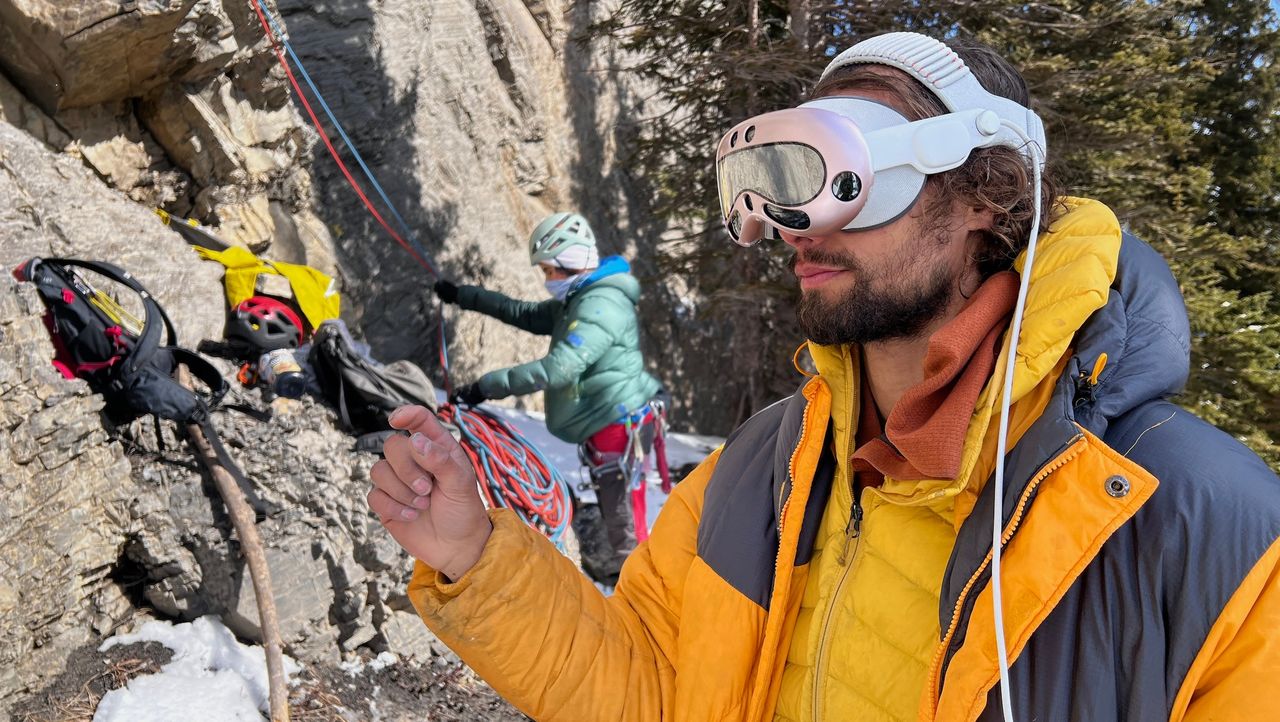
When clinging to the side of a rock wall hundreds of metres above ground, every decision carries life-or-death consequences. Ben Pearman, a 29-year-old master's student in computer science at the University of Calgary, has channeled his dual passions for climbing and technology into developing ThreeTopo, an innovative app that provides detailed digital mapping of climbing routes to enhance safety for traditional climbers.
The inspiration behind ThreeTopo
The idea for ThreeTopo was born from Pearman's personal climbing experience on Mount Yamnuska's formidable Red Shirt route in Alberta's Bow Valley region. As an avid climber since age 18, Pearman understood firsthand how the massive 240-metre limestone face presents a navigational challenge, appearing deceptively uniform from a distance.
"The scale just swallows you. And you're like, 'Oh man, it's really easy to get lost here,'"Pearman explained. He recognized Red Shirt's status as the "crown jewel" of Rocky Mountain climbing routes, making it the perfect proving ground for his technological solution to a problem familiar to all trad climbers.
Technical development and functionality
ThreeTopo represents a major advancement in climbing technology. Pearman employed drone photography to capture high-resolution images of the rock face, which he then transformed into interactive three-dimensional digital models using specialized software. The app's sophisticated algorithms analyze potential navigation paths while accounting for practical climbing considerations like handhold placement and route difficulty.
"You'll want to start traversing left from the anchor. Once you hit the corner, start heading upwards until you reach a bolt,"illustrates the app's capacity to deliver precise verbal instructions. This level of detailed guidance marks a significant improvement over the traditional method of relying on outdated, often cryptic typewritten notes left by previous climbers. Pearman prioritized one-handed operation in the app's design, ensuring climbers can access crucial information while maintaining secure holds during ascents.
Testing with experienced climbers
Miles Abesdris, a 38-year-old trad climber who.int/" target="_blank" rel="noopener">who participated in testing ThreeTopo, emphasized how the app addresses core challenges of traditional climbing. Unlike sport climbing with permanent anchors, trad climbing requires climbers to place and remove temporary protective equipment as they ascend - a process that demands accurate route knowledge.
"Your hands and feet are great, but you've got to know where to go,"Abesdris noted. He described how experienced climbers typically develop an intuitive sense for identifying weaknesses in rock formations over years of practice, but even veterans can make dangerous miscalculations. ThreeTopo provides objective data to complement these subjective assessments, potentially preventing life-threatening errors.
Safety implications for the climbing community
Pearman's motivation for developing ThreeTopo stems from his direct knowledge of climbing accidents.
"I know a bunch of people who have had to be rescued by helicopter,"he revealed, adding that
"Everyone I know has gotten off route at some time."These sobering experiences drove him to create a solution that could reduce unnecessary risks while preserving the sport's essential adventurous spirit. The app's potential benefits extend beyond individual climbers to alleviating pressure on mountain rescue services that frequently respond to navigation-related emergencies.
Future expansion and accessibility
Pearman plans to make ThreeTopo publicly available and envisions establishing a comprehensive, crowdsourced database of climbing routes across North America, spanning from British Columbia to Nevada. This expansion would address a significant deficiency in climbing resources - while popular routes often have guidebooks, many lack detailed, up-to-date navigation information. The app's underlying technology could potentially be adapted for other vertical sports such as canyoneering or via ferrata, possibly establishing new safety benchmarks across adventure sports.
Broader context of outdoor recreation technology
ThreeTopo emerges as part of a growing movement in outdoor recreation technology but distinguishes itself by specifically addressing climbing's unique vertical challenges. Unlike conventional horizontal navigation apps designed for hiking, Pearman's solution accounts for the three-dimensional complexity of rock faces. The app also incorporates practical field considerations with features like offline functionality and power efficiency - critical for remote climbing locations where charging capabilities are limited. As outdoor sports continue growing in popularity among participants of varying skill levels, specialized tools like ThreeTopo may become indispensable for managing increased participation safely.
The evolving relationship between technology and climbing
The introduction of digital navigation tools prompts important discussions about technology's place in a sport that traditionally values self-reliance and minimal equipment. ThreeTopo navigates this complex relationship by providing supplemental information rather than replacing fundamental climbing skills. The app doesn't eliminate the need for proper training, physical conditioning, or sound judgment - it simply offers clearer route information to support decision-making. This approach respects climbing's heritage while acknowledging that improved information can enhance safety without diminishing the sport's inherent challenges.
Pearman's project demonstrates how targeted technological solutions can address specific safety gaps in adventure sports. Rather than creating dependency, ThreeTopo aims to build confidence and reduce preventable accidents, allowing climbers to focus on developing their skills and enjoying the mountains safely. As the app evolves and expands to include more routes, it could establish new standards for climbing safety while preserving the sport's essential spirit of exploration and personal challenge.